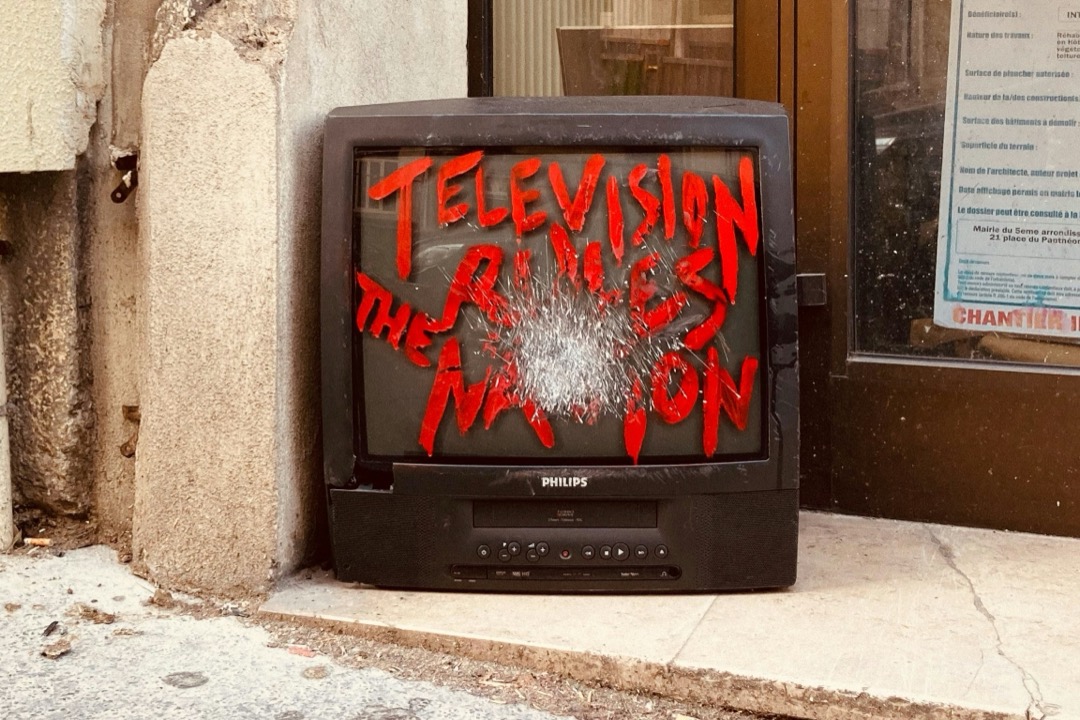
Adam Aleksic wrote recently on the similarities between the harms we popularly attribute to social media and those attributed to television. I grew up squarely in the midst of the moral panic that Baby Boomer parents felt over the malign influence of television on their children. No doubt influenced by their own tender years spent in front of the “boob tube,” there seemed to be endless hand wringing over not whether but how much TV would damage kids’ brains. I see the parallels between that shared freakout and today’s panic over the impact of social media, even as I harbor plenty of concern myself.
The first and most obvious parallel to me is that so much of the anxiety seems to be displaced from parents to children. That is, the young parents of the 70s and 80s represented the first generation of children who grew up with TV in the house expressing worry about its influence on their own children. It’s not hard to see how much of that concern seems motivated by fear of the damage their own exposure to television may have caused. Likewise, today’s young parents come from the first generation of social media users, and one way they are grappling with the harms they experienced is to express worry for their children. Like many parents, I’m not only trying to minimize my daughter’s exposure to social media, I’m also minimizing my own.
I think Aleksic’s notes on the similarities between TV and social media should prompt those of us who see the harms as distinct to be more clear about what those differences are. Two immediately come to mind for me:
The first is accessibility and ubiquity, as noted in his piece. The availability of social media on personal, portable, handheld devices greatly increases its reach, and its ability to send urgent-seeming notifications and alerts allows it to interrupt non-social media activities and colonize more of our time and attention. Television, much as its critics may have complained about its supposed inescapability, could never have such direct, immediate, and intrusive access to its viewers.
The other is the very tight feedback loop of individualized, algorithmic adjustments these apps use. Any individual TV channel was (and is) the same for all viewers. But modern social media apps learn from their users, reading both overt and subtle, implicit behavioral cues to shape their behavior. It’s critical to remember that social media apps are designed with a goal in mind—almost always to encourage more and more time and “engagement” in app—and are designed to achieve those goals by constantly tweaking the way they work. These adjustments can be so effective because they are based on a direct stream of individualized behavioral data (each user’s activity within the app), and they do not need to compromise their effectiveness by targeting more than one individual at a time. In other words, it poses no problem if the thing that would make your social media feed maximally engaging to you would be extremely distasteful to me, because I’ll never see your feed.
The propagandists of the mass media era had to develop grand theories of messaging and communication to underlie their efforts to manipulate public sentiment, because they could only address their messages to the collective public. (e.g., Propaganda by Edward Bernays) Modifying behavior through social media requires no larger framework to inform what works and what doesn’t. Its infinitely granular addressability and adaptability simply requires the diligence to conceive of and execute as many experiments as necessary to achieve the desired result, because the effectiveness of each can be easily and directly measured.
This effect is magnified by how much tighter the experimental iteration cycle is in the social media world than it is in television. In just a few seconds of scrolling through a feed, a social media app may run dozens of experiments to gauge a user’s engagement and adjust its behavior in real time. The amount of time it takes to produce a piece of television media, broadcast it, gather audience feedback, and incorporate changes into more content is better measured with a calendar than a stopwatch. And this means that even if each refinement has only a tiny effect, the overall impact is much greater because refinements can be made in much greater volume.
It is certainly instructive to consider modern attitudes toward technologies like social media in the context of earlier generations’ reactions to media innovation. It’s important to remember that, in their day, the invention of the novel and the spread of mass market paperback publication were both considered socially harmful by at least some concerned authorities. But it’s also important to identify what’s distinctive about new media technology and consumption, and to be able to articulate how those distinctions might represent new risks. It’s far harder to mitigate or manage unidentified risks than those we assume intentionally with good information.
With the state of American news media today being a very live concern, I was reminded of two films I saw a few years ago describing the production of news in another era. The two films were both produced by the Encyclopedia Britannica, whose film output was previously unknown to me, and both are named “Newspaper Story.” The first is from 1950 and describes a seemingly fictional local newspaper in a midwestern town. The second, from 1973, documents the production process of the Los Angeles Times.
I find both of these films fascinating. One reason is the approach to gathering and reporting on news described in these pieces, which strikes me as speaking for an optimistic American post-war media consensus, idealized and imperfect as it is. The other is the amount of effort that went into the physical production of the papers themselves. The advent of near-instantaneous digital communication completely restructured these enterprises and shifted media companies’ primary efforts away from what was previously the thrust of their work: producing some physical product, whether bundles of printed pages or towers that beam radio signals to receivers.
Both of these are great watches, but if you’re only going to watch one, I recommend the LA Times film from the 70s.
I already link to Bracket City, a daily word puzzle, from my links page. But I haven’t yet linked to the Bracket City Dispatch, the newsletter that for some reason hasn’t moved over to The Atlantic with its namesake game. It’s an interesting word-of-the-day newsletter. I’d really love to find something to replace the Paul McFedries’ old Word Spy newsletter, which focused on neologisms, but for now, this will do.
Speaking of daily puzzles, I recently discovered Doople, in which players find pairs of words that link together to build a chain. It’s a lot like Puzzmo’s Circuits, which came out just a month or two ago and uses the same core puzzle concept with a more variable structure.
They don’t make it (software) like they used to
I have seen a bunch of good essays and blog posts from technologists trying to grapple with the weaknesses of LLMs without sliding into facile dismissal or doomerism. One that really helped me with my own thinking on the matter is Why your boss isn’t worried about AI by Boyd Kane, which does a good job breaking down key ways LLMs don’t work the way software typically does. It’s hard to emphasize enough how important determinism is for programming, and the way LLMs rip away that assumption (possibly irrevocably so) is extraordinarily disorienting. But, as this piece lays out, that’s not the only assumption being broken.
The Great Software Quality Collapse: I look at this as a kind of companion piece to Boyd Kane’s essay. Even traditional, non-LLM software is going through a crisis of quality. It would be very difficult to argue that commercial software hasn’t become a profligate resource waster. The headline example in this essay, the MacOS calculator app leaking 32GB of memory, is a grievous example that should be a wake-up call for the industry. Not because of its cost—for better or worse, memory is cheap these days—but because of what it says about how the industry is failing to do quality work. Wasting 32GB of memory, especially for an app as simple as a desktop calculator, is hard, and actually shipping such an enormous flaw should make everyone think twice about how risky software is.
No seriously, they don’t make it like they used to
This charming little training film illustrates the way people thought about bringing computer technology into the enterprise almost 50 years ago. One of the bitterest ironies in the state of computing today is that there are still plenty of corners of the business world that could still benefit from adopting very basic information technology, but that’s not where the money is right now.
Generally speaking, these collections of links point to things out on the broader Web, but I reserve the right on occasion to highlight my own stuff. Earlier this week, in a fit of early-aughts nostalgia, I recreated a web toy that had been a very popular feature of my ancient, defunct blog: The Potty Humor Name Generator. Rebuilt from scratch as a client-side single page app, this little amusement will help you, too, relive the joy of pointless Web tools featuring the comedic stylings of the Captain Underpants series of kids’ books.
After you’ve wrung all the enjoyment out of my own humble contribution to making the Web fun again, which shouldn’t take long, some more worthwhile ways to use your time could include the new (launched today!) daily game Tiled Words, an interesting cross between a crossword and a tile-laying puzzle.
There is also the 10,000 Drum Machines project, whose name describes its goal better than its current state. Still, 55 Web-based interactive drum machines (as of today) is a pretty impressive collection. I love these kinds of creative tools and really want to see more of them.
Things To Think About
I was recently thinking about contronyms, which are words that can be their own opposites. One classic example of this is the word “dust,” which can refer both to removing dust (e.g., “he dusted the bookshelves”) and adding dust or powder (e.g., “he dusted the counter with flour”). In my case, I was thinking about the word “deliver,” which means both providing something (“deliver the package”) and taking something away (“deliver me from evil”). In the course of my wonderings, I happened upon the phase “skunked term”, which to me captures not only the specific linguistic experience of a term’s usefulness diminishing because of changes in its usage but also something larger about the experience of trying to communicate more generally as semantic drift seems to accelerate in these first few decades of the millennium.
Things To Watch
You think you know about bowling, but do you know about duckpin bowling? What if I told you there are a whole bunch of YouTube vidoes containing full telecasts of duckpin bowling matches just waiting for you to watch? When I was a kid, it felt like this stuff was on local TV all the time, and honestly, we’re worse off without them.
And as a bonus this week, a modern classic of the YouTube Poop genre, especially for Columbo superfans such as myself:
The years when my musical taste really formed were somewhat later than Gang of Four’s prime creative period in the late 70s and early 80s, but their influence was clearly legible in many of my favorite bands. This live TV performance of “He’d Send in the Army” is such a perfect rendering of Andy Gill’s unique approach to the guitar within the driving groove and urgency of the subject matter (sadly still all too relevant over 40 years later).
It happens so rarely that a recommendation algorithm brings me good new music that I take note when it happens. Most recently, The Delvon Lamarr Organ Trio happened across my feed, and I have been hooked. They play a kind of small-combo funk that really lands for me, and while their studio recordings are great, you can also find some excellent videos of their live sets, one of which I’ve included below.
(Non-Musical) Notes
Ian Leslie’s notes on growing older: For something that happens constantly to every living thing, it’s strange how little we talk or write about aging. If the theory here is that we’re all in a state of collective denial, that can’t be contributing to a healthy society.
Adam Aleksic’s notes on slop: I’m still chewing on this list, but one major takeaway for me has been to remember that we had slop before we had AI to create it for us. I think the impact of algorithmic feeds and automated content generation are only beginning to be felt, much less reckoned with.
Podcast
I’ve already written two posts inspired by episodes of PJ Vogt and Sruthi Pinnamaneni’s Search Engine podcast, but this recent episode with Ryan Broderick discussing the “Dubai Chocolate theory of the internet” is I think a very illuminating look at the path an idea takes through social media to ubiquity. The number of highly specialized influencers (e.g., hot women eating food on camera) and their reach, combined with the incentives at play (e.g., people can’t taste food through social media, so it has to be visually striking—not necessarily in a good way—to become popular) are elements that drive culture, even for people who don’t participate in them directly.
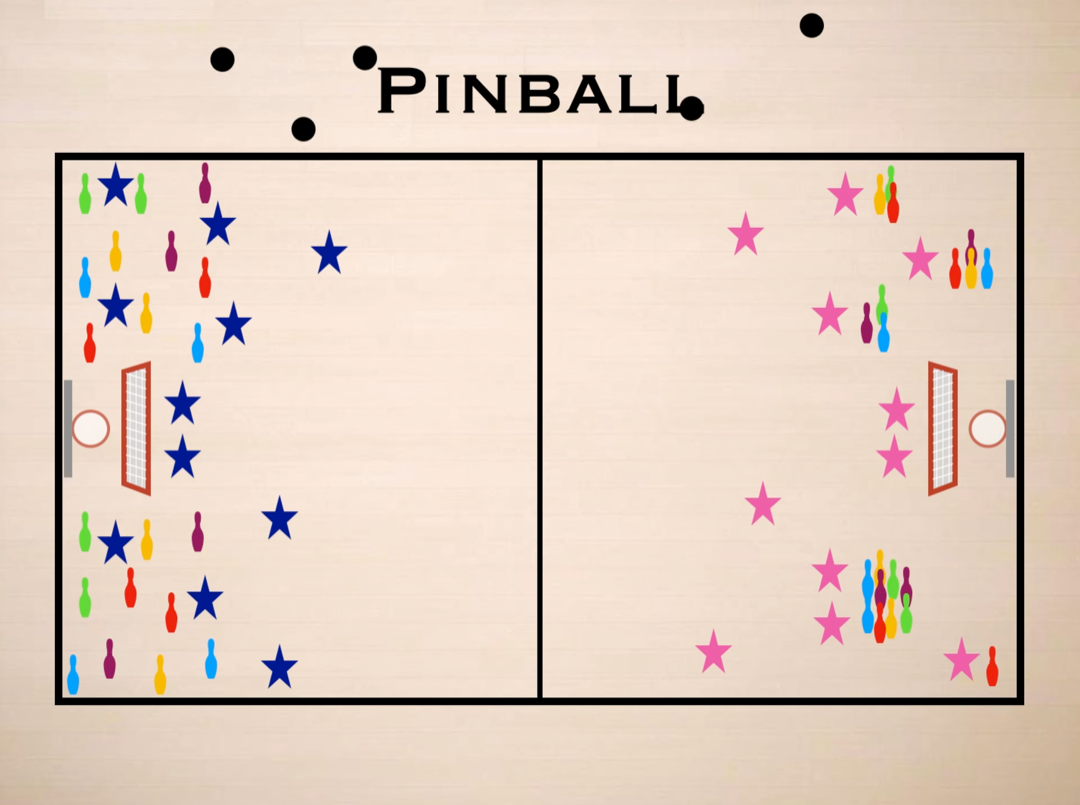
This is a site and a YouTube channel I happened across that catalog all kinds of games invented for physical education classes in schools. I have fond memories of playing floor hockey and matball, especially when it was too rainy to use the fields, and I found myself unexpectedly tickled to see such a collection of games invented by gym teachers for their students. Some of these games look pretty good!
A few months ago, I laid out a plan for slowing down posting on this blog for the summer. That break has gone largely as I expected it would, giving me the chance to focus on a couple of other projects. Throughout September, when I had originally planned to get back to regular updates here, I was instead preoccupied with getting one of those projects over the finish line. Though I didn’t quite manage to complete it—and I’ll write more about it here when I do—I am close enough at this point that I’m ready to get back into more regular Stray Thought updates.
Here’s the Posting Plan
I intend to write here on a regular schedule for the rest of 2025. About every other week, I plan to post a piece along the same lines as the other bits and pieces on the site.
I’m also going to start a new series of posts. Each week, I plan to post a collection of links to things I find interesting. I’ve come to the conclusion that if I don’t want algorithmic social media feeds to drive everyone’s experience of the Web, I should try to provide an alternative, even if only in some small way.
So, over the course of the week I’ll keep track of worthwhile articles, videos, podcasts, interactive tools, and whatever else I happen to come across, and then drop a little bundle of goodies on the site. Human-curated online content for human consumption, just like an old-fashioned weblog. I haven’t decided on the best day to post those, so I may play around a bit at first, but I’ll get the first one up this coming weekend.
Topics to Look Forward To
A few topics I kicked off 2025 with will likely be making repeat appearances sometime around the New Year. I plan to do the Advent of Code again this year, and while I don’t think I’ll post through that event, I will gather my thoughts into a wrap-up post afterward. I’ll also be posting a 2025 ludography reviewing my board gaming activity.
That’s in addition to some reflections I hope to share about the side projects I’ve been working on over the summer. Right now I’m too engaged in the “doing” to be doing much “reflecting,” but I’m fairly certain that there will be something worthwhile to write when the time comes.
Thanks
Thanks for sticking with me as the site grows through these seasons of activity. I’m feeling recharged after the break, and it’s so fulfilling to share my renewed creative energy with you.
It can be hard to perceive the subtle and gradual ways I change over time. Rationally, I know it’s happening, but until something specific tells me otherwise, I tend to think that whatever is true about me today was true about me in the past and vice versa. Evidence of these long, slow changes can be hard to come by. There are obvious things, of course: I have no shortage of pictures that prove I don’t look like I did when I was younger. But it’s not every day that I’m confronted with a way my moral intuitions have shifted.
It came up unexpectedly, as moments of self-realization often seem to. My daughter and I were watching an episode of Mythbusters. If you’re unfamiliar with the series, it aired on Discovery from 2003-2018, and its original idea was for a crew of special effects experts to film experiments confirming or disproving urban legends and other popular folklore. Early on in the show’s run, it expanded its focus to include movie scenes, internet rumors, news stories, and more.
The specific episode we watched was “Paper Crossbow” from 2006. At this point in the show’s run, most episodes have a two-story structure. The original hosts, Adam and Jamie, test one myth while the “build team” works on another, with the edit cutting back and forth between the two. In this episode, the hosts tested whether they could build a lethal crossbow from newspaper while the build team experimented with household uses for vodka.
As a side note, we watched this episode as a family not long after we ourselves used some cheap vodka to get the smoky smell out of some clothes and camping equipment that had been too close to a fire burning uncured firewood, so we already knew firsthand the result of one of the myths tested in that episode.
It was a different vodka myth that caught my attention, and it wasn’t the result of the test but the experimental setup that was striking. The build team tested whether vodka would act as an insecticide if sprayed on bees. They got bees from a beekeeper, divided them into two ventilated acrylic boxes, and sprayed the contents of one box with water and the other with vodka to see which would kill more bees. Now, with a little bit of thought, it’s clear that even if no bees were killed by the vodka or water (and, in fact, only two of the bees in the water box died during the experiment), all of the bees were going to die. Honeybees depend on their hives to survive; removed from the hive, they die.
Don't worry, they're only sleeping... for now
I have no doubt that when I originally watched this episode, I had no problem with it. But now, it strikes me as needlessly cruel to treat bees this way. Insofar as this change is part of a larger shift in my moral intuitions around the treatment of animals, it’s not a very large shift. I still eat meat, though perhaps less than I did 20 years ago, and I am not shy about killing bugs in my living space. But I can say with some confidence that if I had been part of the Mythbusters build team in 2006, I would have seen nothing wrong with the experiment, while I would object to running it in 2025.
It’s possible that some of this shift has to do with the bees themselves. Not long after the episode originally aired, I, like many other Americans, started to learn about colony collapse disorder and the ecological and agricultural importance of honeybees more generally. Being aware of those issues certainly makes me wonder what the beekeeper who provided the bees was thinking, but I don’t think it explains how my reaction changed. After all, I’m experiencing an intuitive response to the experiment on moral terms, not a calculated analysis of the benefits and drawbacks of killing important and valuable animals for a science education show.
Seriously, what were you thinking?
Instead, I think this is just an example of an imperceptibly gradual change at the heart of the way I see and judge the world. I hope it’s for the better: I would like to think that I grow more attuned to suffering and more willing to speak and act against it as I get older. Or, maybe the duty of care I feel for the world applies to a larger set of things than it did before. I don’t know for sure, but I can say that I’m clearly not the same as I was when I watched this show back in 2006. And that’s a bit of valuable self-understanding.
I encourage you, too, to consider how your moral orientation has changed over time, and how it hasn’t. Just as you might look at your picture in an old yearbook, consider how the passage of time has deflected your moral compass. Don’t just think about when you have been most comfortable—it’s almost a cliche that the worst people lose the least sleep over their behavior. Try to find these points of difference and explore them. Because the deeper truth about the way time changes us is that it reveals we are never finished products. There is always more change to come.
Recently, for family movie night, my wife and I watched the original Naked Gun (1988) with our not-quite-teenage daughter. The idea was somewhat prompted by all of the advertising we’ve seen around LA for the new Naked Gun reboot coming out this weekend. The experience spurred me to read about what makes things funny and reflect on how audiences engage with comedy over time and how younger generations react with fresh perspectives to old humor.
My first takeaway is simple: the movie is still pretty funny. I laughed at many of the jokes, and my daughter found it funny (in parts), too. Part of this is because the Zucker-Abrahams-Zucker filmmaking team is like what basketball fans call a “volume shooter”—if you take a lot of shots, you’re going to score some baskets. Or, to look at it another way, packing a movie as full of gags as possible means that they don’t all need to land.
According to my daughter, the funniest scene in the movie comes just after the credits, when the hapless Nordberg unsuccessfully attempts to singlehandedly bust a drug deal. I tend to agree that one of the true pleasures of this movie is the amount of punishment it dishes out to OJ Simpson’s character, whose limited screen time is unrelentingly humiliating.
I found the jokes she didn’t get just as interesting. It was no surprise that the cold open, featuring lookalikes playing a rogue’s gallery of foreign adversaries in the typical 80s-era American mind, didn’t connect. But I didn’t expect her to ask what was going on during the title sequence, shot from the siren’s-eye-view of a police cruiser’s roof. I guess police emergency lights no longer look anything like spinning reflectors.
Watching the movie got me thinking about what makes things funny in the first place. Researcher Peter McGraw has proposed the Benign Violation Theory, which might come as close as I’ve ever seen to a theory’s name explaining itself. The core idea is that humor arises from situations that an audience perceives simultaneously as both incorrect and acceptable—that is, both a violation and benign. There’s definitely room to argue with this theory, but I do think it explains a lot about what makes things funny.
Consider a few jokes from the Nordberg drug bust sequence through the lens of the Benign Violation Theory. Most viewers are familiar with the idea that a police officer might break down a door to apprehend a criminal. So, when Nordberg attempts this move only to get his leg stuck in the door, viewers experience it as a violation. When Nordberg demands a gang of armed criminals drop their weapons, and one dimwittedly obeys, both characters have violated our expectations of reasonable behavior. Importantly, the sequence only plays as benign because the film has already established (in the cold open) that it is operating in a world where violence does not harm its characters. The scene would not be funny if the audience didn’t already know that Nordberg will be okay no matter how many times he gets shot or how many bear traps he steps in.
Benign Violation Theory also explains why the cold open wasn’t funny to my daughter. For example, she had no reaction to seeing Leslie Nielsen’s character wipe Mikhail Gorbachev’s famous birthmark off his head. To a kid who may never have seen an image of him before, neither Gorbachev nor his birthmark carries any significance, so it doesn’t register as a violation.
This theory helps explain why some humor goes stale and how comedians can create humor that stays funny. While nobody would mistake me for a comedian, I think much of the work of being funny lies in creating the violation, which is more often than not a subversion of the audience’s expectations. The classic structure of a joke involves a setup, in which the comedian does something to trigger an expectation, and a punchline, which violates that expectation. Something purely surprising can be a good punchline, but relying on surprise is one way comedy becomes stale. True surprise is a one-time thing, and once the audience knows the surprise, the trick loses its magic.
Great comedy isn’t only funny the first time around. When you know the joke by heart—perhaps because it’s in a 37-year-old movie you’ve seen more times than you can count—and it remains funny, it’s because the comedian has managed to violate your expectations even though you knew what was going to happen. Sometimes the punchline is truly outstanding or delivered in a uniquely perfect way. But I think most enduring jokes owe their longevity to the way they are set up. A great setup leads audience members almost subconsciously into an expectation, which gets punctured by the violation no matter how familiar they may be with the joke.
Although the classic joke structure persists because it works, comedians can also subvert it to great effect. One thing I noticed while watching The Naked Gun was the number of jokes that have little or no setup at all. These jokes depend on the audience to come preloaded with expectations that the jokes violate. A running gag throughout the Naked Gun movies is how dangerous and violent the police officers are. This is one way the movie reads very differently in 2025, especially the line Nielsen delivers after his character is dismissed from Police Squad, “Just think, the next time I shoot someone, I could be arrested.” These jokes worked on the adolescent version of myself who walked into a movie theater with the expectation that police—especially the main characters of detective shows—are helpful authority figures worthy of unquestioned respect. I suppose I find these jokes less funny now for two reasons: my changed expectations diminish the impact of the violation, and my awareness of real police violence makes the joke less benign.
These setup-less jokes not only risk changes in audience expectations, but changes in the audience itself. When future audiences lack the expectations comedians assume they will have—as with my daughter and Gorbachev’s birthmark—the would-be punchlines become confusing nonsense. Comedy that relies too much on specific audience expectations is liable to lose its punch with each passing generation.
The passage of time can also add new context, altering humor beyond the comedian’s original intent. These context shifts can be dramatic, as with OJ Simpson, whose murder trial and resultant infamy could not have been predicted by The Naked Gun’s filmmakers. Seeing a wheelchair-bound OJ Simpson roll down a stadium staircase and tumble helplessly over the railing is funnier to me today than it could possibly have been in 1988. But I can just as easily understand someone who can’t laugh at Simpson no matter how much physical abuse his character endures on screen.
The experience of sharing comedy across generations fascinates me. Sharing something I found funny in the past with my daughter means confronting the ways I have changed, the ways the world has changed, and the ways the two of us are different. But it’s magical when some throwaway gag manages, despite all odds, to connect my past, my present, and my child, like a thread stretching across time. All culture is like this, I suppose, but comedy, with its dependence on shared meanings and expectations, seems especially susceptible to the passage of time. It somehow feels reassuring to know that I’m not the only one who finds “Hey! It’s Enrico Pallazzo!” as funny as I did when I first saw it in my own not-quite-teenage years.
I hope this little digression into humor was enjoyable, or at least interesting. As I think about the direction I want to take this blog, I’d like to make room to write about topics outside of my usual areas of expertise, and I hope I can address them in ways that express how much I enjoy exploring new ideas and learning new things. Explaining a joke may kill the humor, but understanding the universal human experience of laughter feels deeply worthwhile.
One final digression
In the extreme, a joke can be nothing more than its structure. This is what’s going on in one of my favorite species of joke, the shaggy dog story, which was perhaps perfected by the late Norm Macdonald over his many appearances on various Conan O’Brien shows. (Here’s a great example.) These jokes consist of the comedian telling a long story, often full of digressions and unnecessary details, culminating in an anti-climax: either a weak punchline or no punchline at all. The humor arises from the audience’s violated expectations around the structure of the joke itself: setups are supposed to be economical, or at least interesting, and punchlines are supposed to be unexpected and funny. The shaggy dog story does neither of these things, and the audience starts laughing as the realization gradually dawns on them that they’re not getting the joke they anticipated.
I was originally working on a longer post to finish off the month of June, but I couldn’t get it to a place where I was happy with it. There was, however, an element of that post that I thought was both important and worthwhile. So, instead of what I had originally planned, I’m polishing up and posting my notes on the topic of contemporary attention economics.
The concept of the “attention economy” was originally developed by the researcher Herbert A. Simon in the early 1970s, and in recent years it has attracted renewed interest including, among others, popular books by Jenny Odell and Chris Hayes. Simon studied how information affected organizational decision making, work which earned him the Nobel Prize in Economics in 1978. He observed that information had historically been a scarce resource, but that changes in computing and communication technologies were making information more abundant and accessible.
Simon’s critical insight was that information on its own is not all that valuable. To be useful, information must be combined with human attention. Intuitively, this makes sense. If you sit in a room and read a single book, the same amount of information has been transmitted whether you read the only book in the room or you were in a library surrounded by endless shelves of books. It’s your attention to the information that matters.
This key insight leads to an important secondary observation: attention is itself a scarce resource. In fact, attention isn’t merely scarce but fundamentally limited by the hard fact that we each have only 24 hours in a day. Simon theorized that as the supply of information grew, the scarcity of its necessary complement, attention, would become the limiting factor preventing organizations from successfully incorporating the available information.
What Simon predicted would be a concern for strategic decision makers within firms has become an issue faced by every individual on earth with a smartphone, but our challenge is complicated by conditions he never anticipated.
For one thing, the growth of companies whose business models depend on monetizing popular attention has created an incentive structure that would have been alien to Simon. These companies have innovated upon information itself, broadening and flattening it to invent the more flexible concept of “content,” a superset of information that encroaches on all aspects of human attention. Information bears some relationship to facts and data, but content can consist of anything that consumes attention regardless of its truth, meaning, or substance.
Not only do these actors have strong incentives to generate endlessly growing mountains of content, but they also face an economic imperative to capture more and more of their audience’s attention as directly as possible. This means that the amount of content is growing faster than ever, and that platforms actively drive audiences to spend more and more time consuming their content, without regard for its value to them.
The other condition Simon didn’t anticipate is the combination of global-scale social media platforms and ubiquitously-connected smartphones with push notifications, which are the technological changes that truly enabled the modern information environment. It’s characterized not only by an extreme abundance of content, but also by continuous, relentless efforts to seize the audience’s attention through distraction, interruption, heightened emotional intensity, and exaggeration of urgency, importance, and relevance. Innovations like infinite scrolling feeds, algorithmic recommendation, and engagement-based content ranking are all designed to manipulate individuals to consume more content than they would have otherwise.
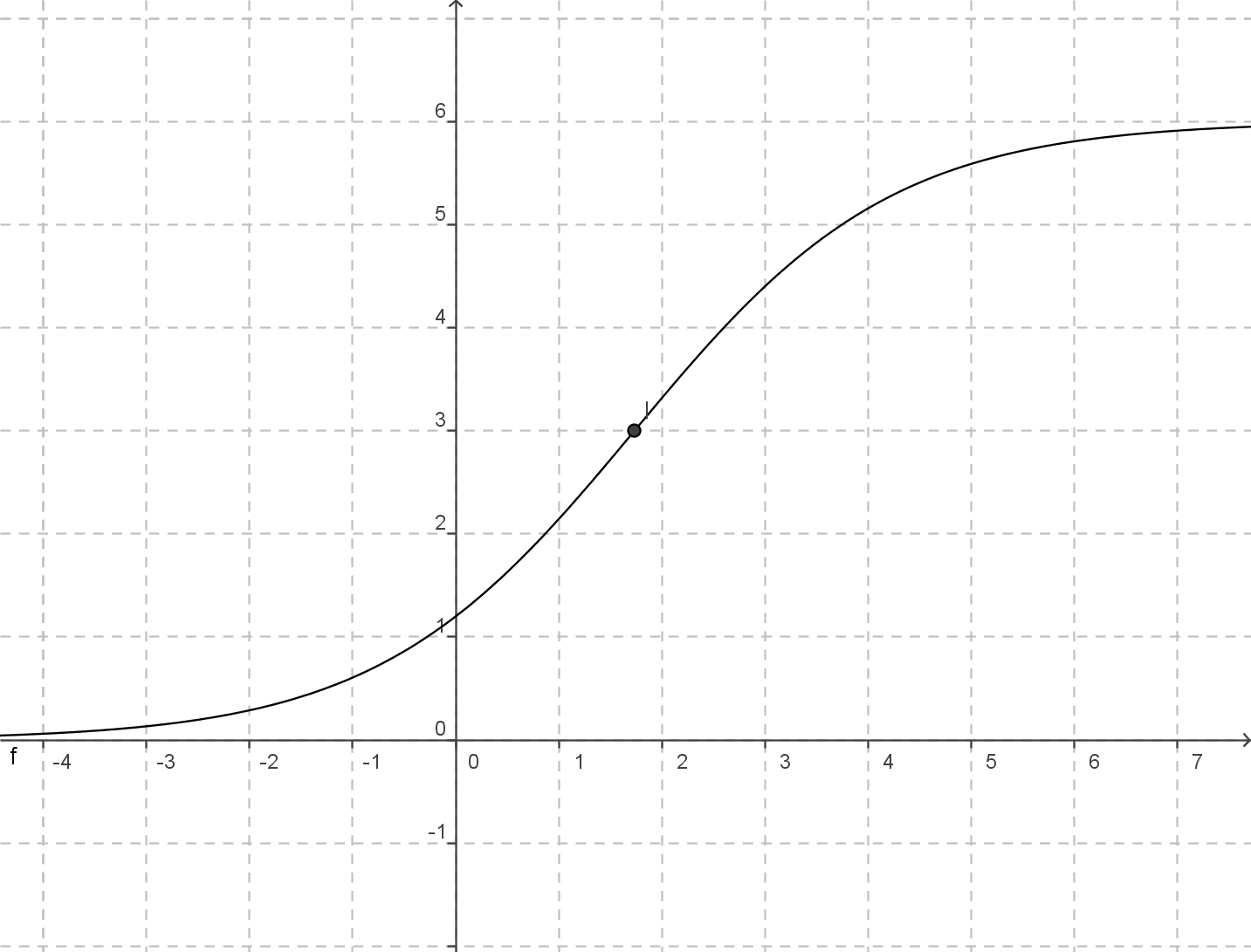
Our good friend the logistic function, courtesy Wikimedia CC BY-SA 3.0: the basic mathematical model for a property that grows exponentially within a limited range.
Simon rightly predicted that informational abundance would cause an organization’s (or the public’s) ability to absorb new information to grow until it started to be limited by scarcity of attention. But nobody knew exactly how that limitation would manifest itself.
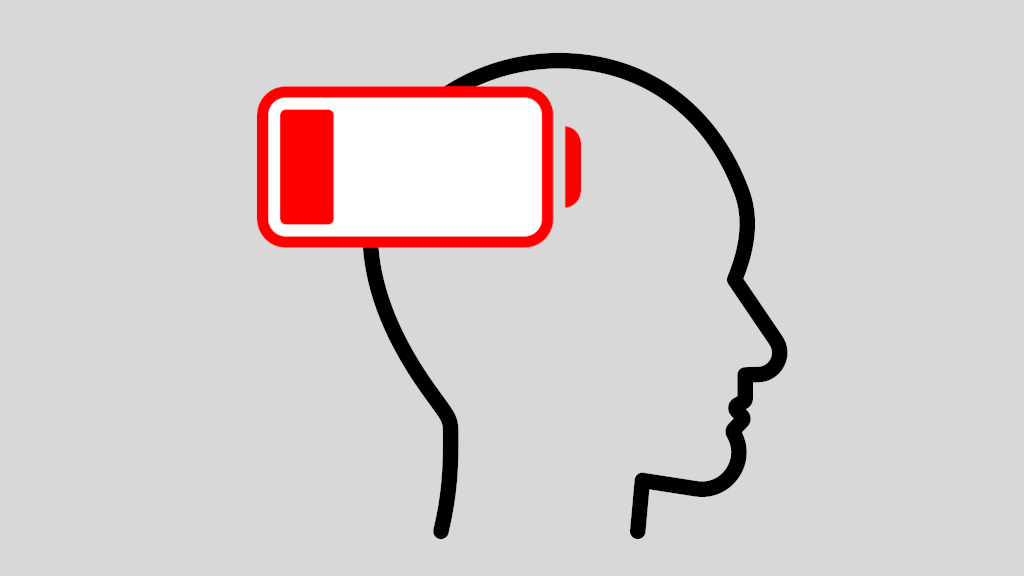
I suspect that what’s currently happening is the process of arriving at a new attention equilibrium as limits on content consumption become driven entirely by attention scarcity. Anecdotally at least, it feels like both online and offline, I encounter people who seem exhausted and troubled by the information overload they experience every day. If I’m right, and the world is starting to bump up against the upper limit of the public’s capacity to absorb content, it’s reasonable to be concerned about how that equilibration will happen.
Because the socioeconomic configuration that created these conditions is exploitative and unregulated, the process of arriving at this new equilibrium is most likely going to be chaotic, ugly, and painful. It would be naive to expect anything else, with platforms using any technique at their disposal to drive ever higher levels of content consumption, combining content of all types (e.g., current events, political opinion, entertainment, intentional misrepresentation, personal communications) into a single, undifferentiated stream, and competing viciously amongst themselves for an increased share of the audience’s limited time.
These changing conditions shape mass public opinion, which seems to be souring on technology in general, and they affect individual experiences as well. Consider a recent report from the American Psychiatric Association suggesting that diagnoses for adult ADHD have increased in recent years. Could this be an indication that people are feeling the effects of the fierce competitive struggle going on over their limited attentive capacity? Maybe people feel overwhelmed and conclude that the problem must be a deficit in their ability to pay attention, when what’s really happening is that their perfectly normal attention is being undermined by an information environment designed to manipulate and exploit it.
Speaking for myself, I’m looking for ways to reclaim my attention and be more intentional about how I spend it. This summer, I’m taking a more active role in choosing where I get my information from and resisting being led by algorithmic feeds. I’m also getting offline more, seeing people in person, and being more present in my community. These are small steps, to be sure, but critical ones. If you are also paying attention to your attention, I’d like to hear from you. Please let me know what steps you’re taking, what’s working, and what’s not.
Back in January when I launched this blog, I wrote that I planned to post content actively in “seasons,” recognizing that neither my inclinations nor my track record made it wise to expect consistent, uninterrupted posting over the long haul. The first season, I thought, would run through May, at which point I would figure out what to do over the summer.
Now that we’re well into June, it’s time to take stock of how this first season has gone and where things will go from here.
First and foremost, I learned that I was terribly out of practice at this kind of writing. Nearly all of the writing I’ve done since retiring my old blog 20-some years ago has been in either a business or an academic context. I think I got pretty good at both, but there is a bigger difference between that kind of writing and what I’m doing here than I anticipated.
The change has been a positive one. It’s good to practice a kind of writing that requires me to devote some effort to welcoming the audience and convincing them to keep reading. It’s also been worthwhile to put effort into cultivating a more aesthetically appealing writing style, a major departure from typical business writing, which usually aims to be generic and unadorned. I don’t know how successful I’ve been, but the mindset shift alone feels worthwhile.
Another thing I’ve learned is that my instincts are driving me toward longer posts. Most of my posts so far have exceeded 1,000 words (including this one), and a few drafts passed the 2,000 word mark before I edited them down. Although I did end up breaking one post into multiple parts, I decided to let my interests guide the writing, so I haven’t prioritized brevity. Instead, I’m writing as much as I feel I need to get my message across.
On my old blog, I experimented with microblogging avant la lettre, posting occasional tiny updates ranging from a phrase or two to a couple of sentences. This feels especially out of place today given the immense malign influence of Twitter on contemporary online culture. These days, the topics that draw my attention seem to demand substantially more space to articulate my ideas. In fact, I’ve determined that some of the topics I’m most eager to write about won’t fit into even a couple thousand-word posts. As I started to gather my thoughts on them, they felt like longer series that might stretch on for a half dozen or more entries. But given how much effort it took to complete more modest posts, I put those series ideas aside for the time being.
The Practical Challenges
Beyond the craft of writing itself, I’ve also encountered some practical challenges. Each post has taken me longer than I expected to complete. Much as I enjoy the process of outlining, drafting, reworking, and editing, each of these things has taken me more time than I had hoped. My rustiness and preference for longer posts certainly contributed to the slow pace, and I’m considering tracking my time more systematically to identify ways to speed things along.
Speaking of time, my other work has also reduced my writing productivity. Surprisingly, my consulting practice proved less disruptive than a side project I started. It has been quite fulfilling, drawing on my coding experience while giving me a chance to explore creative work that’s well outside my comfort zone. But a combination of factors caused that project to take up more of my time in March and April than I expected, which led to an unplanned two-month hiatus. The obvious remedy to that situation is just to post about my side projects, which I will probably start doing, perhaps once the current one is a little farther along.
Plans for the Summer
I’m thinking about the next phase of this project with these lessons in mind. Summer is coming, and between work, family stuff, a bit of travel, and projects on the side, I’ve got a lot going on. I’m going to use the next couple of months to regroup a bit. Taking an intentional break should feel a lot better than living with the angst of an unplanned posting drought hovering over my shoulder.
That said, I don’t mean to disappear entirely. My plan, after probably one more regular post this month, is to post one update a month for July and August, then pick up again with a second season in September. I might experiment with micro-posts as well, but I won’t be putting pressure on myself to post a ton of new content while I take some time to recharge and reorient myself.
A Preview of Next Season
Part of what I hope to accomplish over the next couple of months is to form a clearer picture of what the next season of this blog project will look like. But I do have a few ideas in mind that I can share now.
First, as I mentioned above, I am itching to write about a couple of topics that I think will each require a series of posts to cover in the depth I feel they deserve. Assuming I am able to complete my research and get myself organized, I would like to launch at least one of those series this autumn.
Second, I’d like to figure out what it would take for me to post weekly. That will require me to address at least one of the issues I described earlier around my preparation, pace, and post length. I’m working to resolve the tension between my inclination to write longer posts and my desire to post more often. It’s possible that I’ll come up with a plan for that over the summer, but since I intend to use the time primarily as a break, I will most likely aim for a more manageable posting schedule—something like a major post every other week—when things pick up again in September and try to make incremental improvements from there.
I remain energized by this project, and I encourage anyone who’s thinking about getting (back?) into blogging in 2025 to do it. Despite big platforms’ outsized influence over public attention, the Web as it was originally conceived—distributed, democratic, and a little bit weird—isn’t dead yet. It’s up to those of us who hope to revive it to create and maintain online spaces we control, and I couldn’t be happier to be playing my small part in that movement.






.png)