I spent some time toward the end of last year experimenting with Claude Code, building a little project that I may still finish and release. A lot of other people had the same idea, and many of them shared their experiences before I had a chance to collect my thoughts. Steve Yegge’s Gas Town has been the one I’ve seen circulated the most, though to be honest, most of the attention I’ve seen it receive has been more about gawking than serious consideration.
This post from Jason Perlow called Adventures in Extreme Vibecoding came closest to my experience. I may post my own thoughts in more detail later, but I feel Perlow did a good job getting across the way it feels to start using these new tools. On one hand, you can get a new greenfield idea off the ground with remarkable quickness, and at times the tools deliver good results quite directly. But just as often, I was frustrated by misunderstandings and compounding errors.
The best approach seems to be to create frequent checkpoints and be ready to go back and start fresh as soon as the agent gets off track. Version control is not optional, even for little personal projects! Frequently throwing away work feels very counterintuitive when you’re used to treating programming effort as the most critical resource to optimize for. In the end, I have to think that the viability of coding with LLM-powered agents is going to depend a lot on how expensive they are. Repeated experimentation and frequent false starts only work as long as costs remain low, which makes me wary of how long this approach will make sense.
More Web Games
Word Grid is a clever game that feels inspired by the Immaculate Grid genre of sports trivia. The goal is to fill a word into each square of the 3x3 grid that meets the criteria specified for each row and column. The rarer your word, the better your score.
Chains is a neat word association game that doesn’t seem to be updated every day, but the puzzles that have been posted so far have been enjoyable.
I’ve had this R.E.M. song stuck in my head lately. It says something great about R.E.M. and sad about the state of the world that a 34-year-old political song is still so relevant today.
The Best Video on Board Game Boxes You’ll See This Year
The main link I wanted to share this week is Amabel Holland’s latest video contemplation of board game boxes. As someone who doesn’t mind—even kinda likes—the beige-cardboard-everywhere feel of 90s-2000s eurogames, I’ve watched with fascination over the past few years as the hobby game world has become much more aware of the power of image and marketing. It takes someone like Amabel who takes art games and the game business seriously to really delve productively into areas like boxes and physical presentation, where the reality of games as commercial entities collides with their various other natures—artistic, ludic, or otherwise.
The Best Apocalyptic Synthwave Hammer Time Video You’ll See This Year
The Best Flickr Galler of Public Domain Images That Go Hard You’ll See This Year
I’ve got a lot going on for this holiday week, even before I caught whatever bug laid me low for the past 24 hours, so for links I offer a few entertaining videos: two older songs and one wild compilation.
First, a music video for a song that I remember as one of the first that really attracted me to the then-emerging “alternative” scene. Of course, at the time the only way for me to glimpse this scene was through the tiny keyholes of college radio and pre-Matt-Pinfield 120 Minutes. It’s one of those songs that takes me back to a specific point from the past, and I think the video really captures the aesthetic of a moment:
This other video, from a few years later, is for a song that I have known and loved for a long time. Strangely, though, I hadn’t seen the video until recently.
And finally, there’s this wonderful little clip compilation. As you watch it, I want to remind you that this was posted by the official Jeopardy! YouTube channel:
Paged Out! is, in its own words, an experimental (one article == one page) technical magazine about programming (especially programming tricks), hacking, security hacking, modern computers, electronics, demoscene, and other similar topics. I just got turned on to this, but I am really loving the most recent issue, Issue 7, which came out last month.
The Boston Public Library has posted digital copies of its M. C. Escher prints, and they are really something to behold. I remember a high school art project where my teacher, Mrs. Allard, asked the class to create something inspired by Escher. I did a transitional pen-and-ink pattern-filling based on Day and Night, and I’ve had a soft spot for his work ever since.
I have been thinking about game design a lot lately, so Raph Koster’s latest post, titled “Game design is simple, actually,” is very timely for me. Despite its trollish title, it covers a lot of ground laying out the complexities of game design, but in a very well structured way—better structured, in fact, than I think I’ve ever seen applied. There’s a ton of depth here; he’s not kidding when he says each of the 12 items could be (indeed, is) a whole shelf of books. I expect I’ll be returning to this for quite some time.
Imagery
Context-Free Patent Art: Probably more accurately “Patent Art Taken out of Context,” but close enough.
Is it me or do the issues from this complete collection of Swedish IKEA catalogs look way more interesting than the American versions of the same? At least the ones from the late 90s and early 2000s, which is when I would have seen them.
With the state of American news media today being a very live concern, I was reminded of two films I saw a few years ago describing the production of news in another era. The two films were both produced by the Encyclopedia Britannica, whose film output was previously unknown to me, and both are named “Newspaper Story.” The first is from 1950 and describes a seemingly fictional local newspaper in a midwestern town. The second, from 1973, documents the production process of the Los Angeles Times.
I find both of these films fascinating. One reason is the approach to gathering and reporting on news described in these pieces, which strikes me as speaking for an optimistic American post-war media consensus, idealized and imperfect as it is. The other is the amount of effort that went into the physical production of the papers themselves. The advent of near-instantaneous digital communication completely restructured these enterprises and shifted media companies’ primary efforts away from what was previously the thrust of their work: producing some physical product, whether bundles of printed pages or towers that beam radio signals to receivers.
Both of these are great watches, but if you’re only going to watch one, I recommend the LA Times film from the 70s.
I already link to Bracket City, a daily word puzzle, from my links page. But I haven’t yet linked to the Bracket City Dispatch, the newsletter that for some reason hasn’t moved over to The Atlantic with its namesake game. It’s an interesting word-of-the-day newsletter. I’d really love to find something to replace the Paul McFedries’ old Word Spy newsletter, which focused on neologisms, but for now, this will do.
Speaking of daily puzzles, I recently discovered Doople, in which players find pairs of words that link together to build a chain. It’s a lot like Puzzmo’s Circuits, which came out just a month or two ago and uses the same core puzzle concept with a more variable structure.
They don’t make it (software) like they used to
I have seen a bunch of good essays and blog posts from technologists trying to grapple with the weaknesses of LLMs without sliding into facile dismissal or doomerism. One that really helped me with my own thinking on the matter is Why your boss isn’t worried about AI by Boyd Kane, which does a good job breaking down key ways LLMs don’t work the way software typically does. It’s hard to emphasize enough how important determinism is for programming, and the way LLMs rip away that assumption (possibly irrevocably so) is extraordinarily disorienting. But, as this piece lays out, that’s not the only assumption being broken.
The Great Software Quality Collapse: I look at this as a kind of companion piece to Boyd Kane’s essay. Even traditional, non-LLM software is going through a crisis of quality. It would be very difficult to argue that commercial software hasn’t become a profligate resource waster. The headline example in this essay, the MacOS calculator app leaking 32GB of memory, is a grievous example that should be a wake-up call for the industry. Not because of its cost—for better or worse, memory is cheap these days—but because of what it says about how the industry is failing to do quality work. Wasting 32GB of memory, especially for an app as simple as a desktop calculator, is hard, and actually shipping such an enormous flaw should make everyone think twice about how risky software is.
No seriously, they don’t make it like they used to
This charming little training film illustrates the way people thought about bringing computer technology into the enterprise almost 50 years ago. One of the bitterest ironies in the state of computing today is that there are still plenty of corners of the business world that could still benefit from adopting very basic information technology, but that’s not where the money is right now.
Generally speaking, these collections of links point to things out on the broader Web, but I reserve the right on occasion to highlight my own stuff. Earlier this week, in a fit of early-aughts nostalgia, I recreated a web toy that had been a very popular feature of my ancient, defunct blog: The Potty Humor Name Generator. Rebuilt from scratch as a client-side single page app, this little amusement will help you, too, relive the joy of pointless Web tools featuring the comedic stylings of the Captain Underpants series of kids’ books.
After you’ve wrung all the enjoyment out of my own humble contribution to making the Web fun again, which shouldn’t take long, some more worthwhile ways to use your time could include the new (launched today!) daily game Tiled Words, an interesting cross between a crossword and a tile-laying puzzle.
There is also the 10,000 Drum Machines project, whose name describes its goal better than its current state. Still, 55 Web-based interactive drum machines (as of today) is a pretty impressive collection. I love these kinds of creative tools and really want to see more of them.
Things To Think About
I was recently thinking about contronyms, which are words that can be their own opposites. One classic example of this is the word “dust,” which can refer both to removing dust (e.g., “he dusted the bookshelves”) and adding dust or powder (e.g., “he dusted the counter with flour”). In my case, I was thinking about the word “deliver,” which means both providing something (“deliver the package”) and taking something away (“deliver me from evil”). In the course of my wonderings, I happened upon the phase “skunked term”, which to me captures not only the specific linguistic experience of a term’s usefulness diminishing because of changes in its usage but also something larger about the experience of trying to communicate more generally as semantic drift seems to accelerate in these first few decades of the millennium.
Things To Watch
You think you know about bowling, but do you know about duckpin bowling? What if I told you there are a whole bunch of YouTube vidoes containing full telecasts of duckpin bowling matches just waiting for you to watch? When I was a kid, it felt like this stuff was on local TV all the time, and honestly, we’re worse off without them.
And as a bonus this week, a modern classic of the YouTube Poop genre, especially for Columbo superfans such as myself:
The years when my musical taste really formed were somewhat later than Gang of Four’s prime creative period in the late 70s and early 80s, but their influence was clearly legible in many of my favorite bands. This live TV performance of “He’d Send in the Army” is such a perfect rendering of Andy Gill’s unique approach to the guitar within the driving groove and urgency of the subject matter (sadly still all too relevant over 40 years later).
It happens so rarely that a recommendation algorithm brings me good new music that I take note when it happens. Most recently, The Delvon Lamarr Organ Trio happened across my feed, and I have been hooked. They play a kind of small-combo funk that really lands for me, and while their studio recordings are great, you can also find some excellent videos of their live sets, one of which I’ve included below.
(Non-Musical) Notes
Ian Leslie’s notes on growing older: For something that happens constantly to every living thing, it’s strange how little we talk or write about aging. If the theory here is that we’re all in a state of collective denial, that can’t be contributing to a healthy society.
Adam Aleksic’s notes on slop: I’m still chewing on this list, but one major takeaway for me has been to remember that we had slop before we had AI to create it for us. I think the impact of algorithmic feeds and automated content generation are only beginning to be felt, much less reckoned with.
Podcast
I’ve already written two posts inspired by episodes of PJ Vogt and Sruthi Pinnamaneni’s Search Engine podcast, but this recent episode with Ryan Broderick discussing the “Dubai Chocolate theory of the internet” is I think a very illuminating look at the path an idea takes through social media to ubiquity. The number of highly specialized influencers (e.g., hot women eating food on camera) and their reach, combined with the incentives at play (e.g., people can’t taste food through social media, so it has to be visually striking—not necessarily in a good way—to become popular) are elements that drive culture, even for people who don’t participate in them directly.
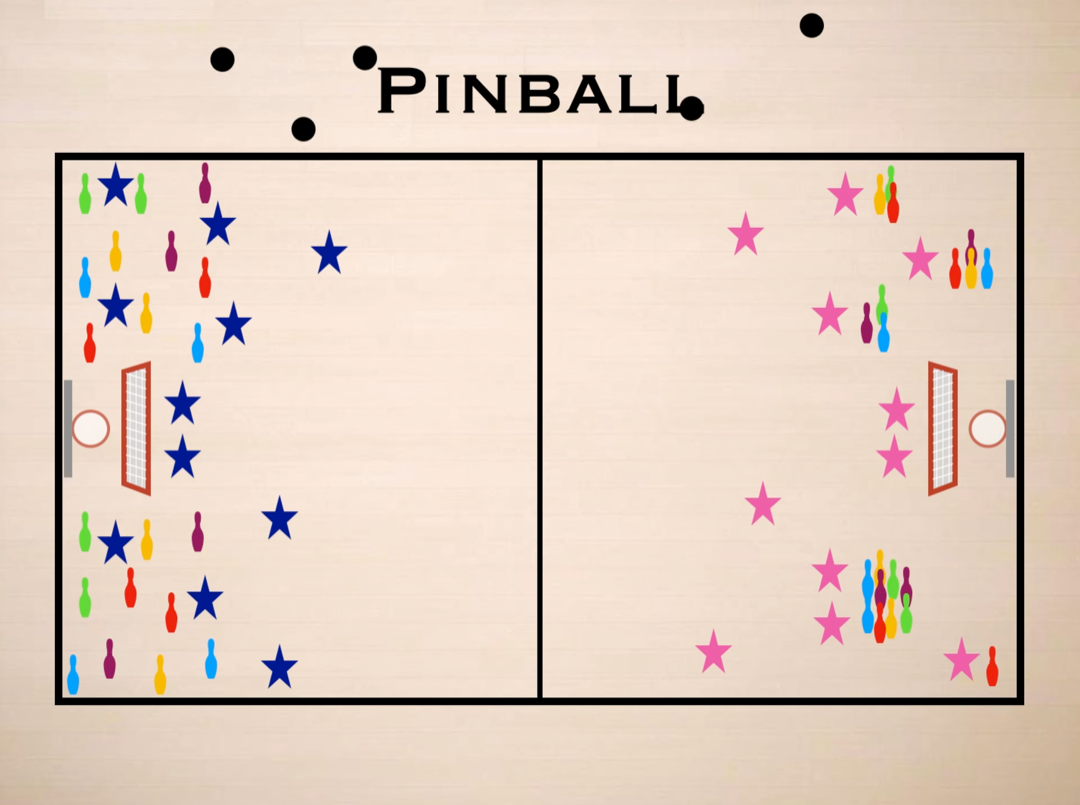
This is a site and a YouTube channel I happened across that catalog all kinds of games invented for physical education classes in schools. I have fond memories of playing floor hockey and matball, especially when it was too rainy to use the fields, and I found myself unexpectedly tickled to see such a collection of games invented by gym teachers for their students. Some of these games look pretty good!